Product description
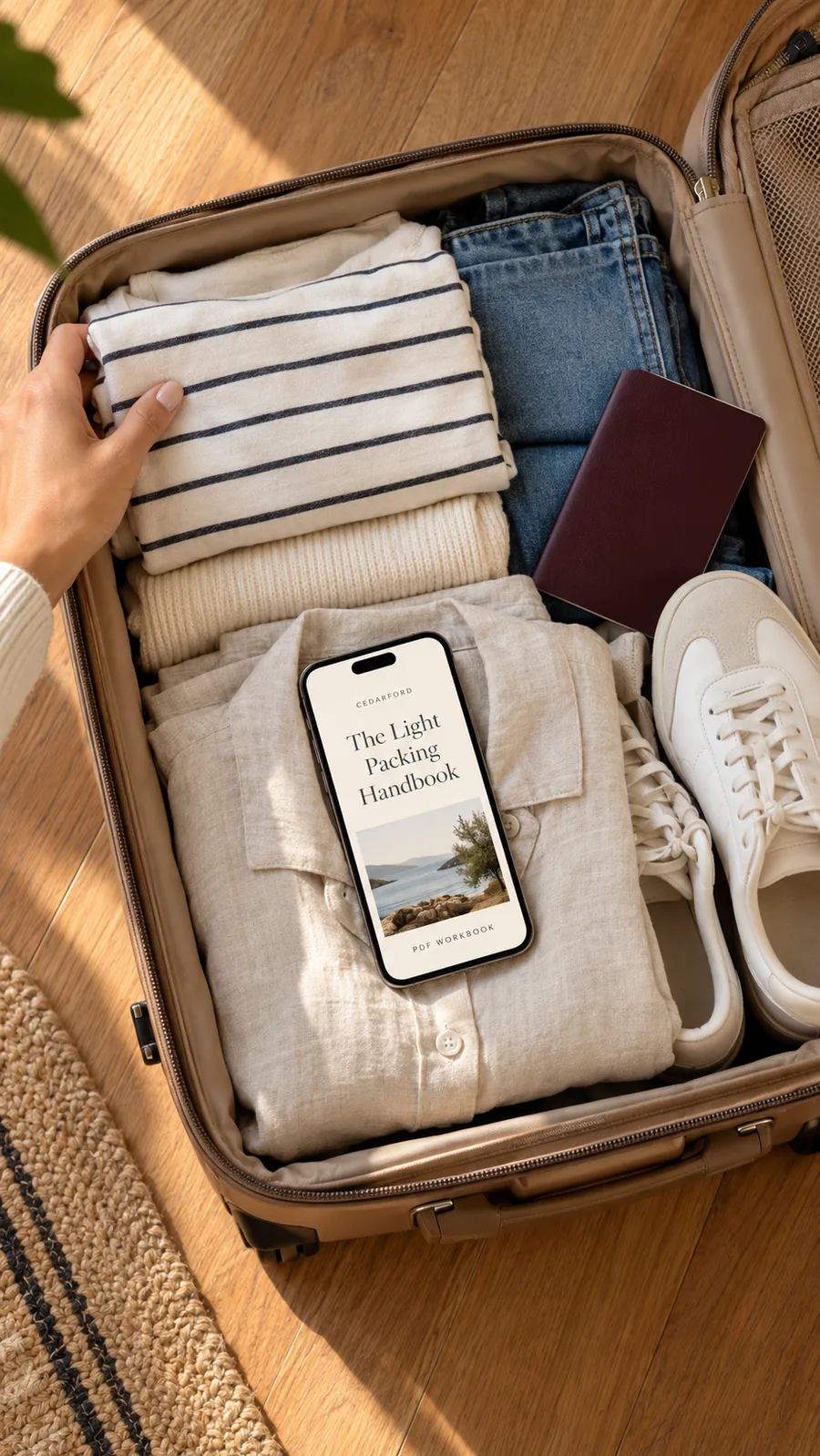
Pack for the trip you are taking, rather than every trip you can imagine. This handbook provides a simple method for choosing clothes, organising essentials and checking what returns unused. It is intended for ordinary short breaks. Check current carrier rules and destination requirements directly before travel; those details vary by journey.
Describe the actual trip
Write the number of nights, planned activities, accommodation facilities and expected conditions. Check a current forecast close to departure. Note laundry access, bedding and anything supplied where you stay. List specialist activities separately so one imagined occasion does not determine the whole bag. Choose luggage only after understanding what the trip needs.
Build a small clothing set
Choose a few garments that work together and can be worn in more than one combination. Lay them out as outfits, including footwear and the outer layer. Count usable combinations rather than individual items. Allow for conditions and your own comfort, then remove duplicated roles. Clothing that only works with one other item often adds more bulk than its usefulness justifies.
Separate essentials from conveniences
Start with required documents, necessary personal items and the tools needed for the purpose of the trip. Keep a copy of important details in a form you can reach if your phone is unavailable. Then add conveniences if room remains. For medication, accessibility equipment or other individual needs, follow your own professional guidance and applicable travel rules.
Use containers by purpose
Group items so they can be found at the moment they are needed. Keep arrival essentials reachable without emptying the entire bag. Separate anything that could leak and keep clean and used clothing apart. Test containers with the quantities you intend to take. Follow current security and carrier rules for liquids, batteries and restricted items rather than relying on an old packing list.
Test the packed bag
Close the bag normally, lift it and carry it for a few minutes. Check the actual measurements and weight against the rules for your booking. Open it as you would during a transfer: can you reach what you need? Remove a low-value duplicate if the bag is uncomfortable or difficult to close. Leave a little room for repacking during the trip.
Improve the list after returning
Unpack promptly and separate what you used, what you needed but lacked and what travelled untouched. Keep genuine emergency essentials distinct from speculative extras. Save a basic list for the same kind of trip, then edit it for the next itinerary. A packing list improves through a record of your own journeys, rather than through adding every suggestion you encounter.